AI Automation Services
Modernize legacy RPA, build intelligent workflows, and deploy agentic AI automation that scales across your enterprise.
Read how to choose the best AI automation partner for your business and why High Peak stands out as your complete partner!
AI automation services that scale with your operations
We design the automation architecture, sequence the rollout, and guide AI integration from first workflow through enterprise-wide deployment, shaping solutions that improve operations and decisions while staying inside your timeline, budget, and delivery expectations.
Our AI automation services stay tied to business outcomes because AI adoption is now mainstream, scaling beyond pilots remains difficult, and operating model and governance discipline still determine who gets lasting value.


AI opportunity assessment
Find high-value AI opportunities across your workflows, data, and customer journey.

Custom AI solutions
Design tailored AI automation workflows that solve specific process bottlenecks and deliver measurable efficiency gains.

Process governance
Address implementation risks early, protect continuity, and keep delivery aligned.

AI roadmap development
Transform manual processes into intelligent, end-to-end automated workflows with built-in governance.

Systems integration
Fit AI into current systems and workflows with minimal operational disruption, including integrating AI into legacy systems.

Scalable architecture
Build scalable AI automation pipelines that evolve with your business processes and data flows.
Customer stories
From finance automation to healthcare operations, High Peak helps teams turn AI plans into shipped systems and measurable process gains.

How a Fintech Analytics Provider Scaled to 27 Credit Unions on a Single ETL Core
Our client is an AI-powered analytics and recommendation platform serving banks and credit unions in the...
Read More
Automated Payment Processing Solutions
High Peak simplifies/streamlines the client’s payment processing environment with automated payment reminders and credit-scoring solutions. Automated...
Read More
AI in Knowledge Management: High Peak’s Case Study on Scirevance
Are you curious about unlocking your organization’s untapped potential and accelerating decision-making? Then knowledge is the...
Read More
Simplify Patient Care with High Peak’s Disease Management Software
Updated on April 25, 2025 Inefficient patient and disease management can lead to increased wait times,...
Read More
Robust Healthcare Referral Management Software
Updated on April 25, 2025 Are you frustrated with the inefficiencies in healthcare referral management? Looking...
Read More
Boosting Ad Revenue: How a Fintech Media Leveraged High Peak AI to Improve Ad Relevance
The fintech sector is rapidly evolving and driven by advancements in AI. As per the Future...
Read More
Smart Healthcare Ad Campaign Management System
Facing challenges in effectively advertising healthcare and medical equipment? It’s a common pain point! As per...
Read More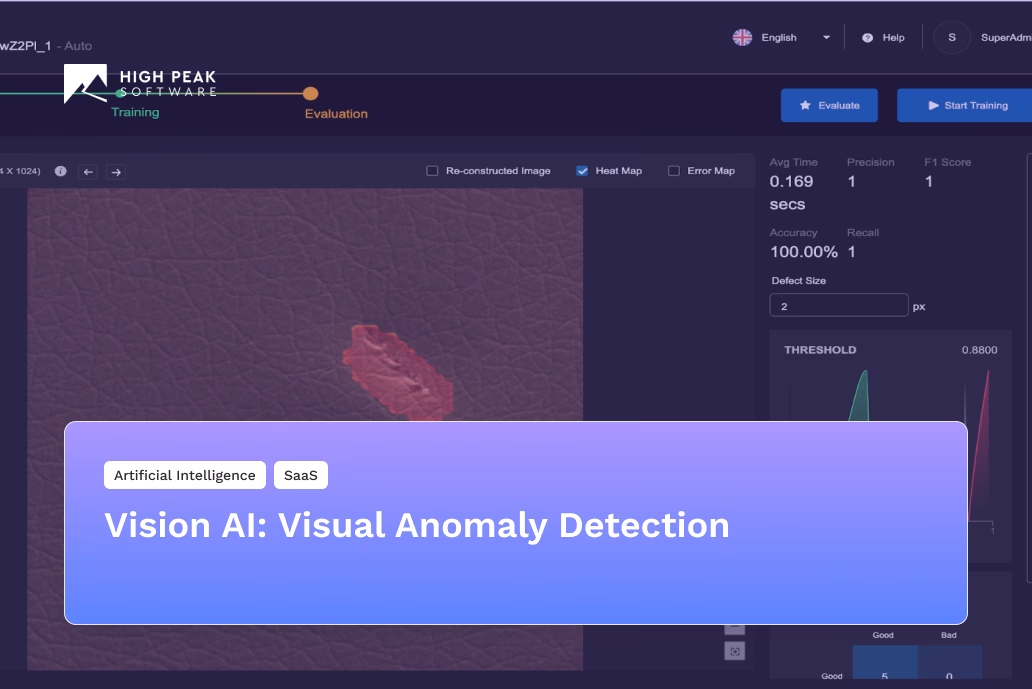
Vision AI: Visual Anomaly Detection
Vision AI is an automated surface defect detection platform based on computer vision and machine-learning algorithms....
Read More
Community Based Group Buying Ecommerce App
Did you know that pricing is a major purchasing factor in the fragmented African e-commerce market?...
Read More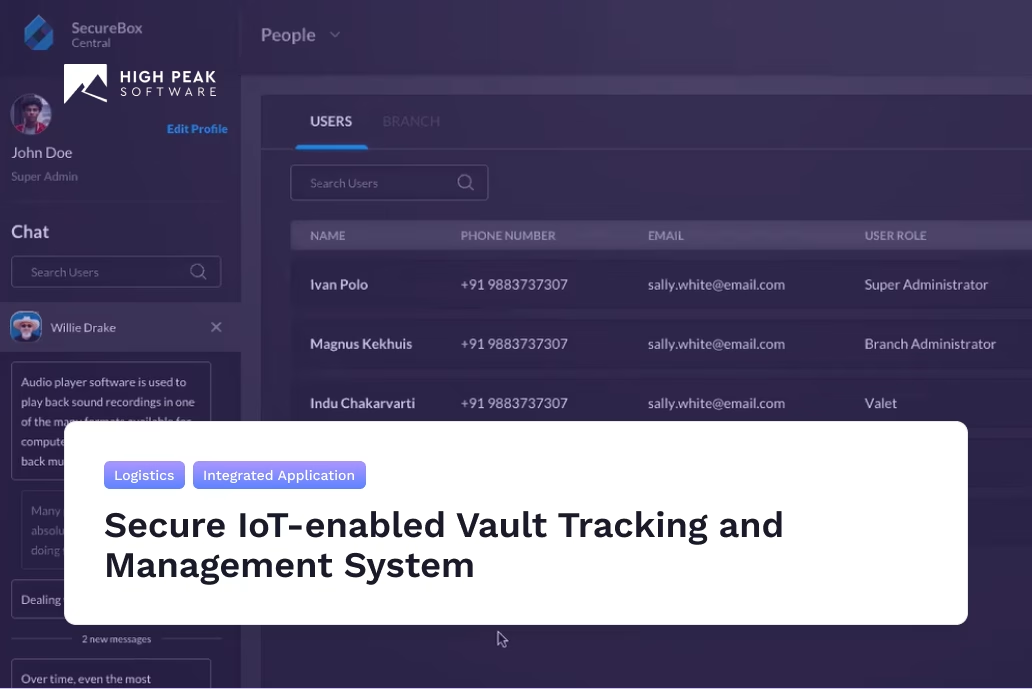
Secure IoT-enabled Vault Tracking and Management System
In the present-day market, transporting high-value assets like cash, gold, sensitive documents, or luxury goods is...
Read MoreWant to know about our
other services


Ready to Get Started?
If you are evaluating enterprise AI automation, do not start with a flashy demo and hope governance appears later. Start with a workflow worth automating, a realistic integration plan, and clear control points, then let High Peak Software turn that into a delivery roadmap. Talk with our team about discovery, architecture, or deployment support.